From The Front
The Greek Civil War (1946–1949) was a violent conflict between the Democratic Army of Greece (DSE), the military branch of the Communist Party, and the National Army (ES), supported by the United Kingdom and the United States. It is considered the first armed confrontation of the Cold War and remains the most lethal episode in contemporary Greek history, leaving behind a divided society and a long-standing legacy of trauma. I come from a generation that was never taught about this part of history. In school, Greek history ended abruptly with World War II. My initial exposure to the Greek Civil War came through literature, reading Mission Box by Aris Alexandrou. The experience hit like a punch to the gut: in a fictional 1949, the war is still unresolved. A mission to deliver a sealed box is expected to determine its outcome. The wounded and those who fall behind are poisoned with hydrogen cyanide. The narrator is the only one who reaches the destination, only to find the box vacant, highlighting the futility of the entire mission.
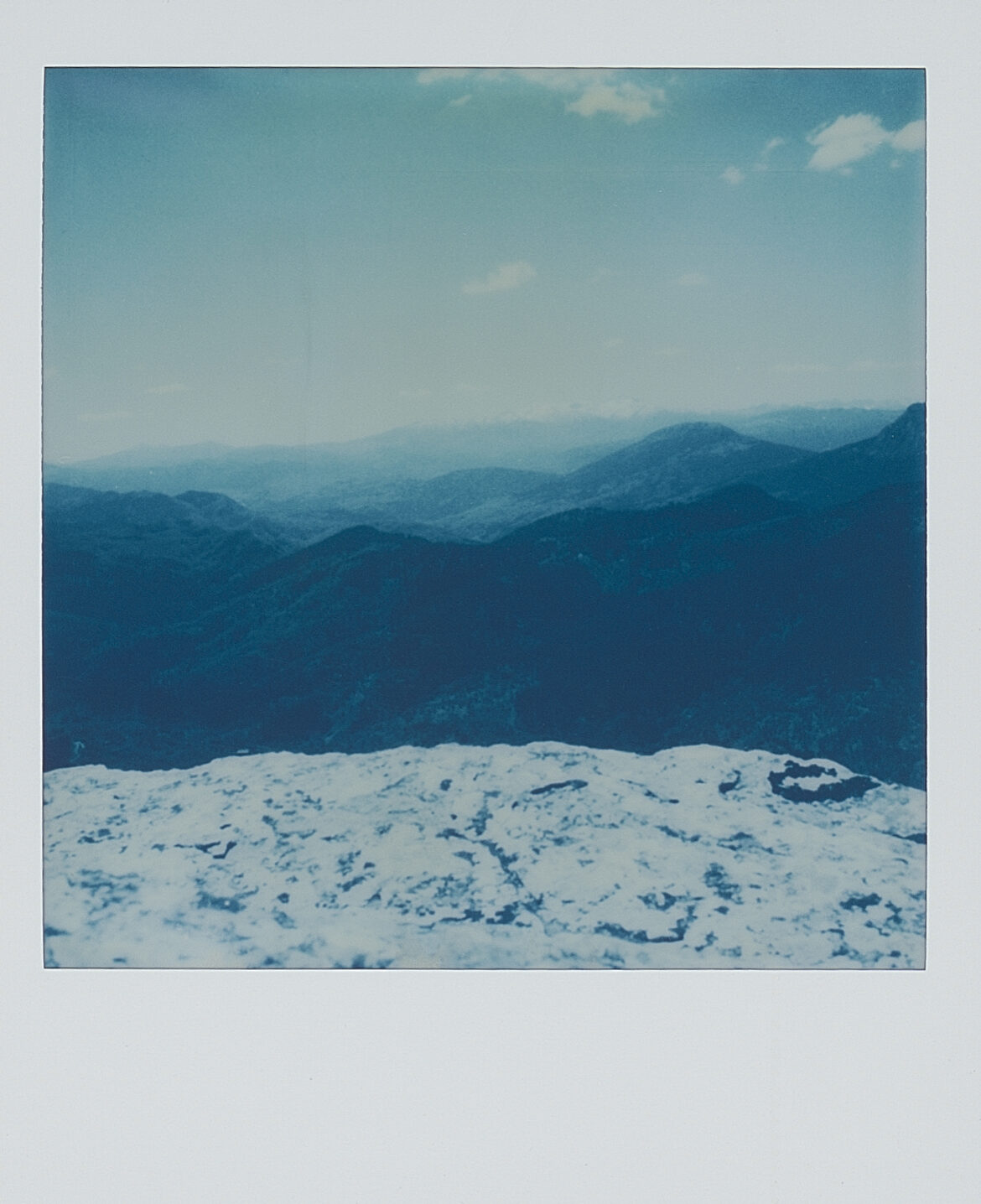
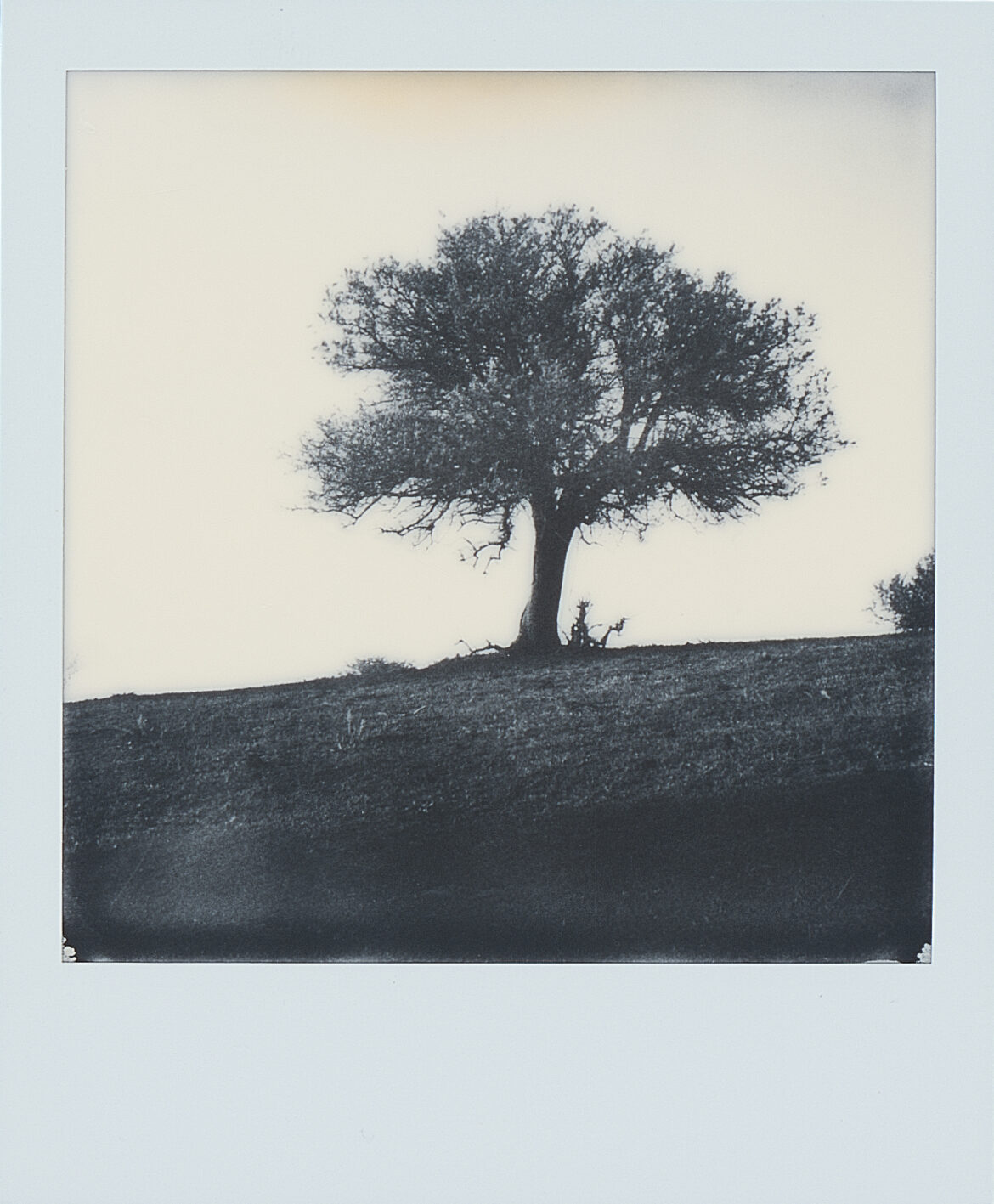
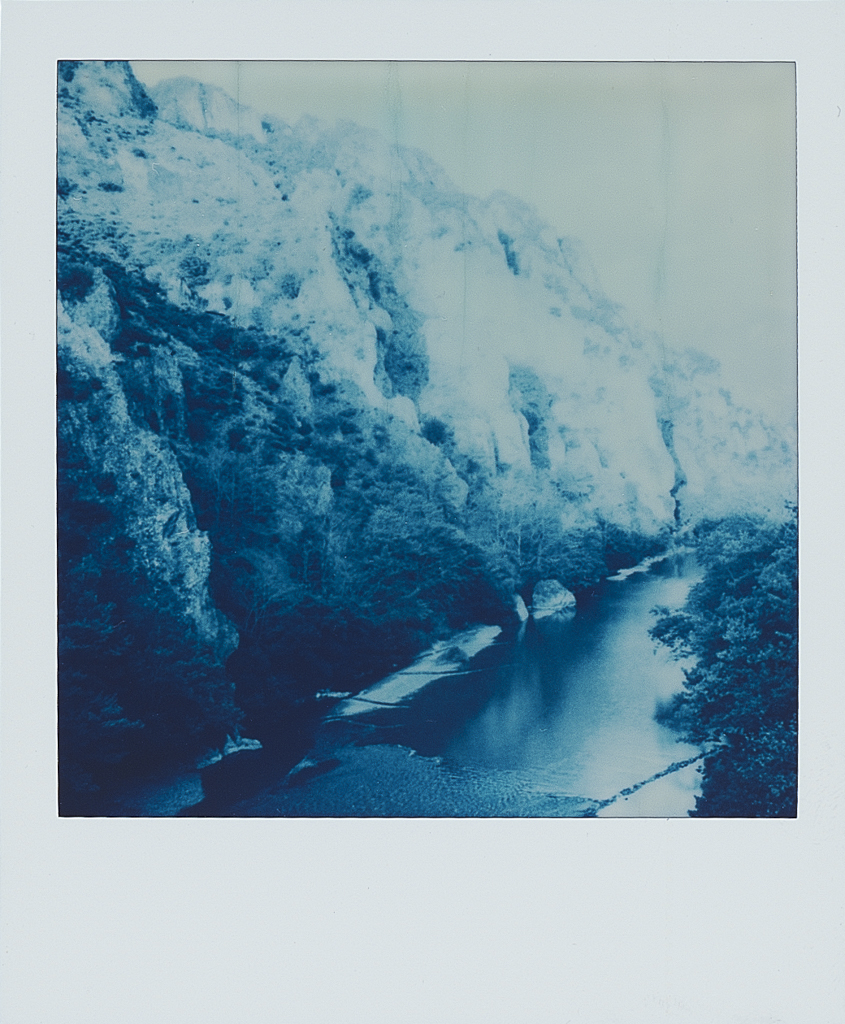
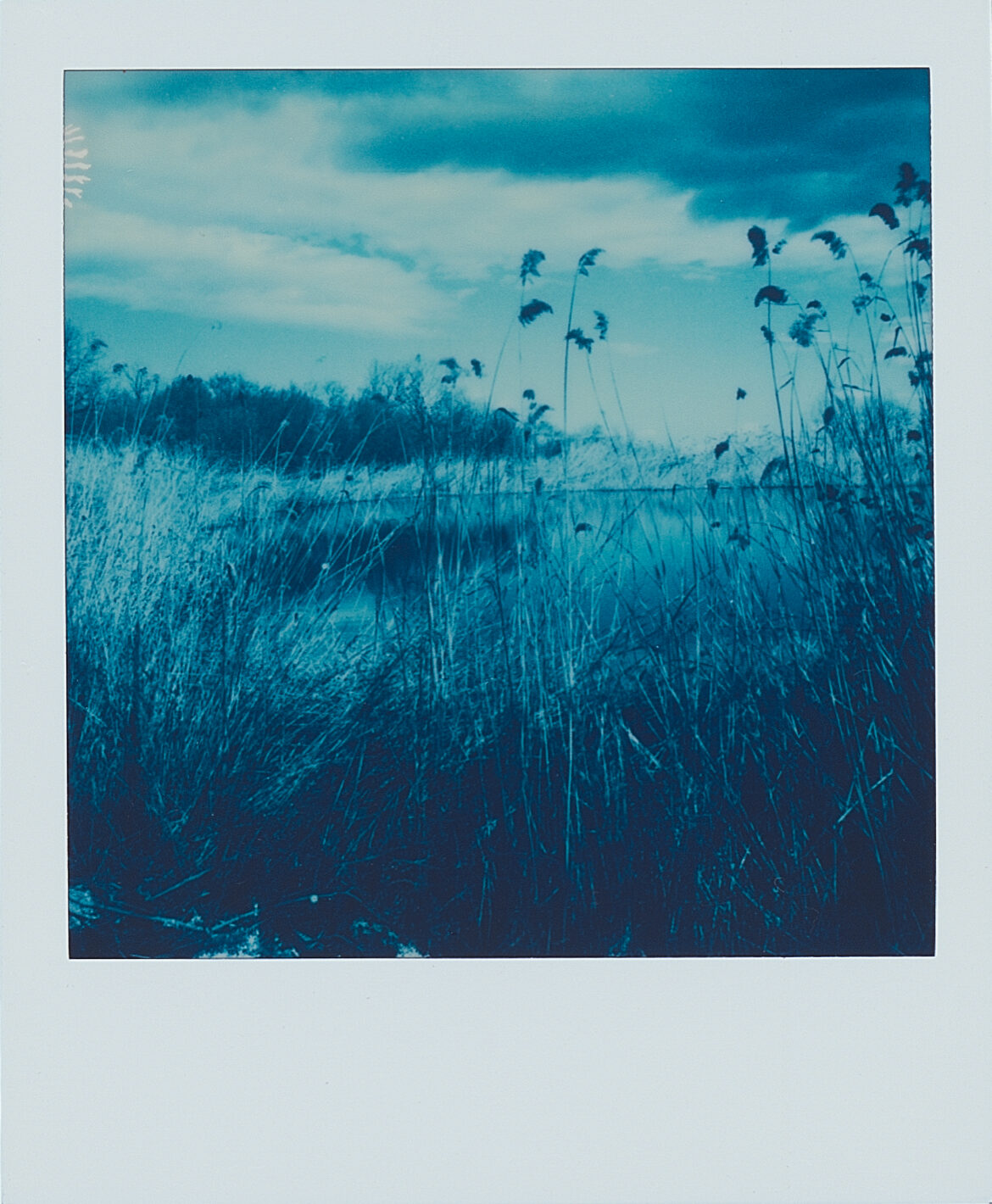
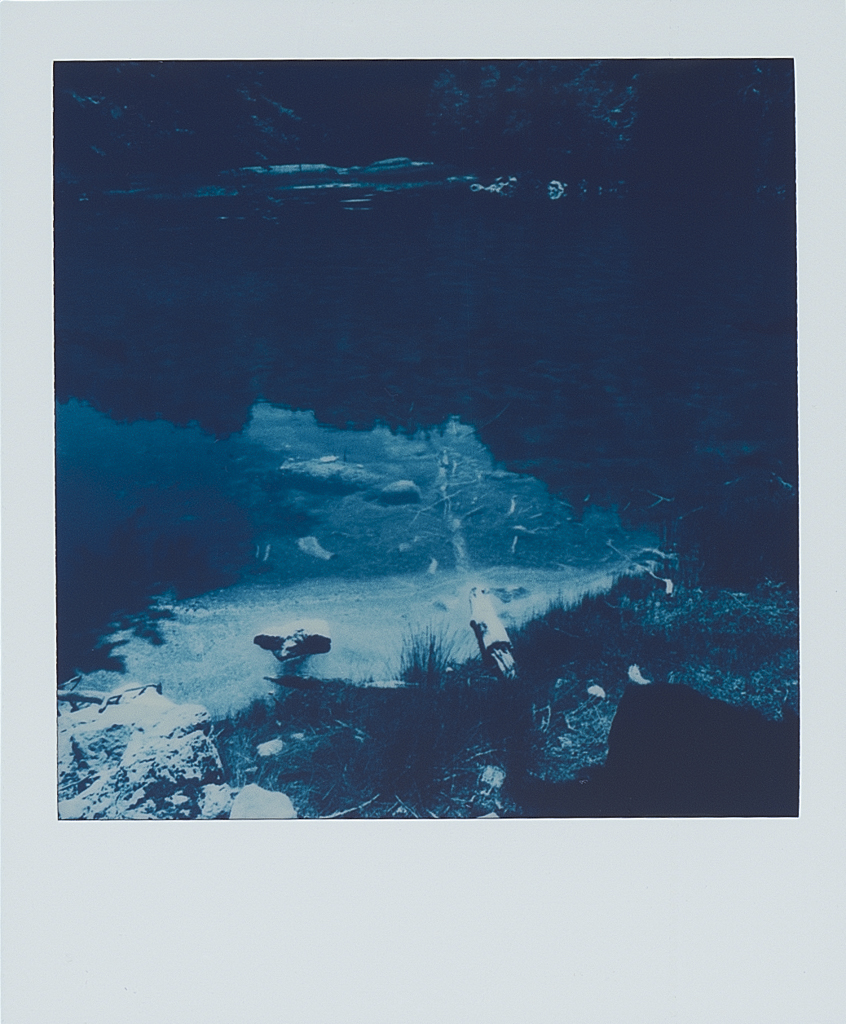
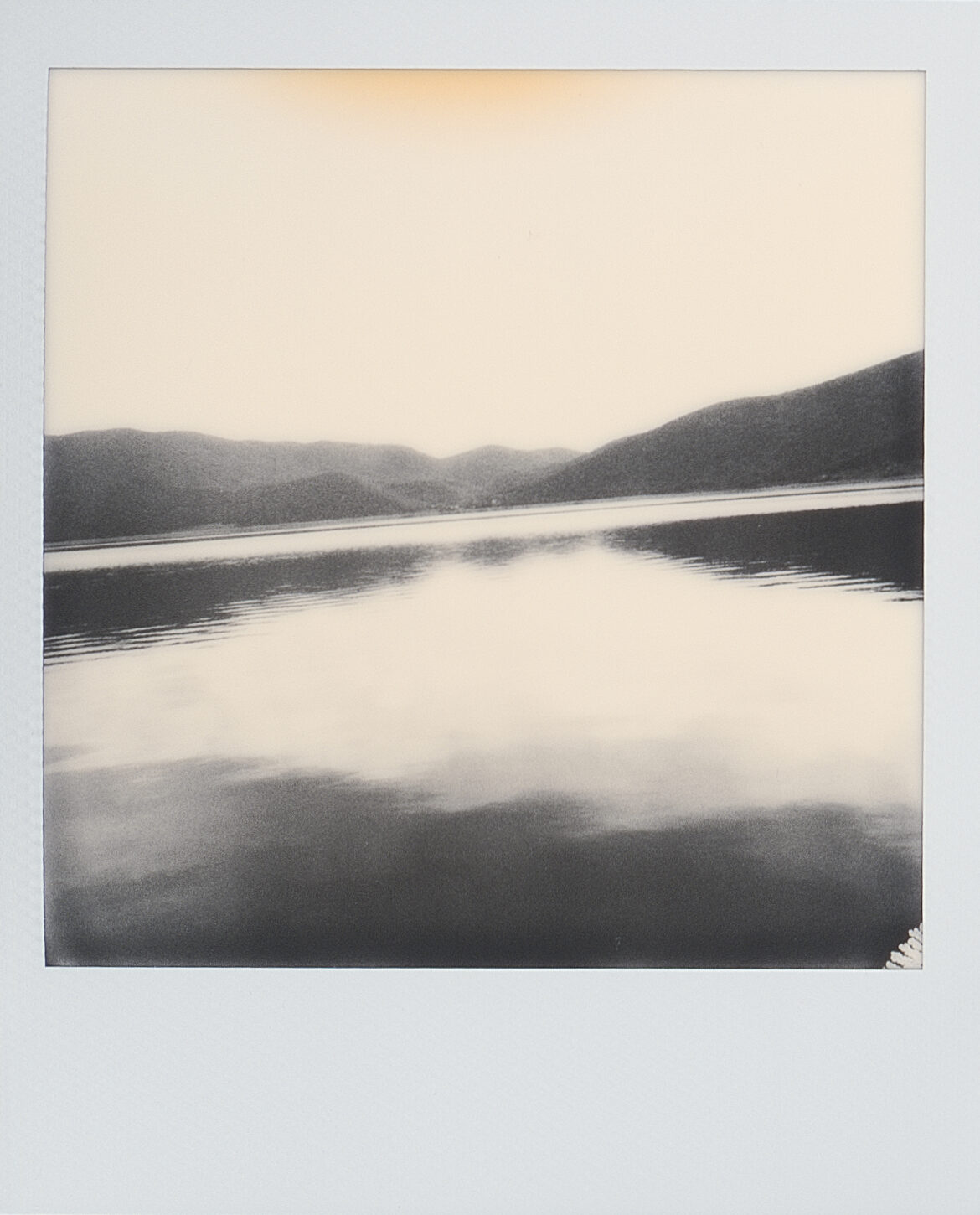
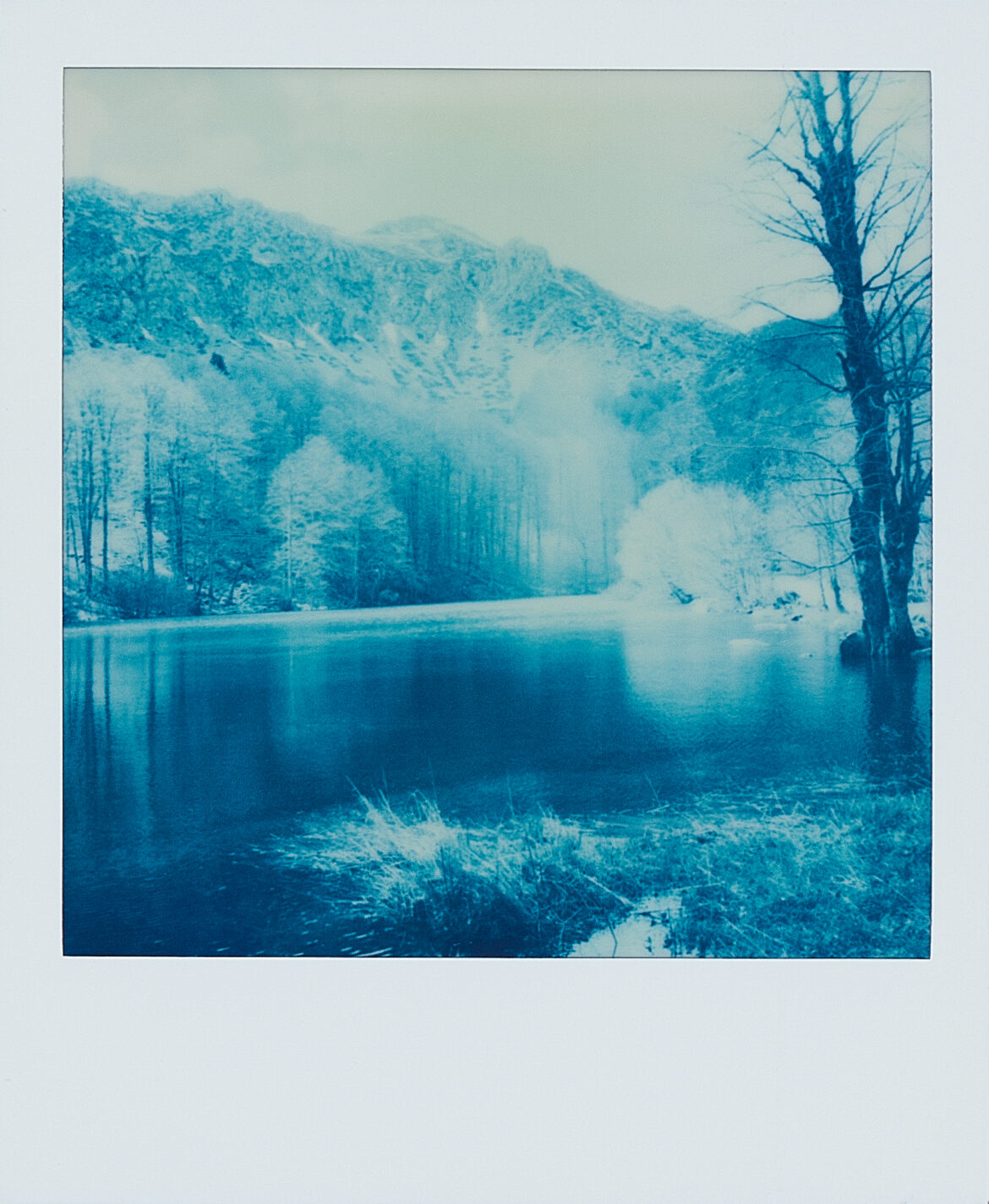
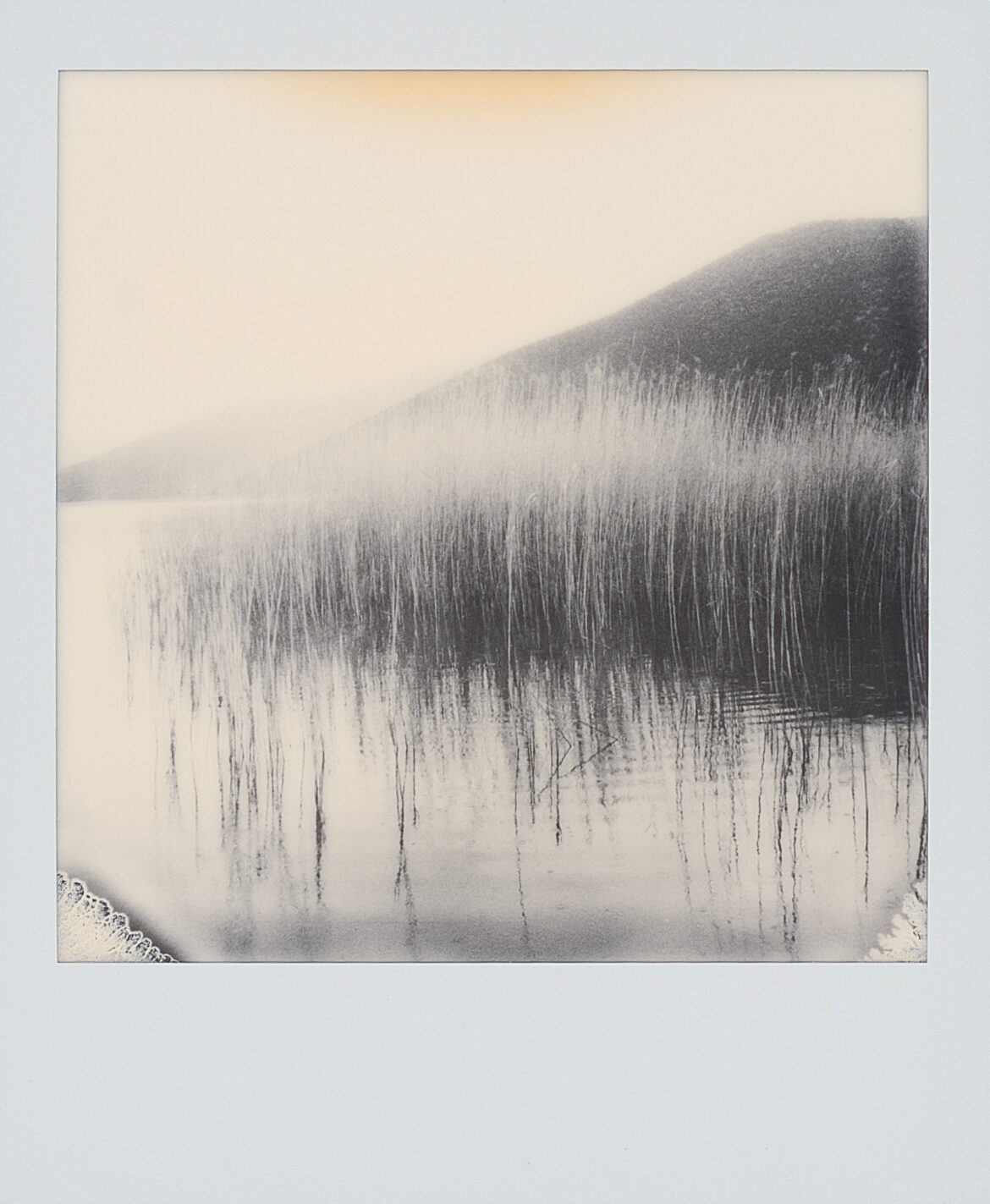
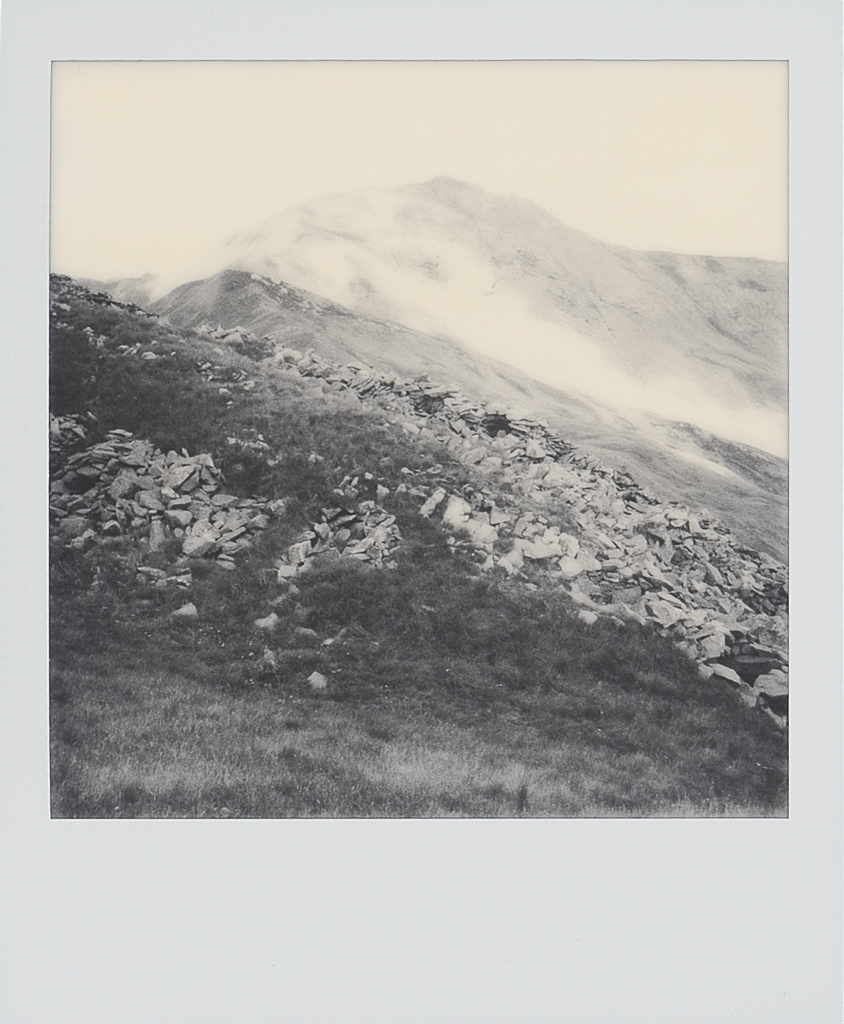
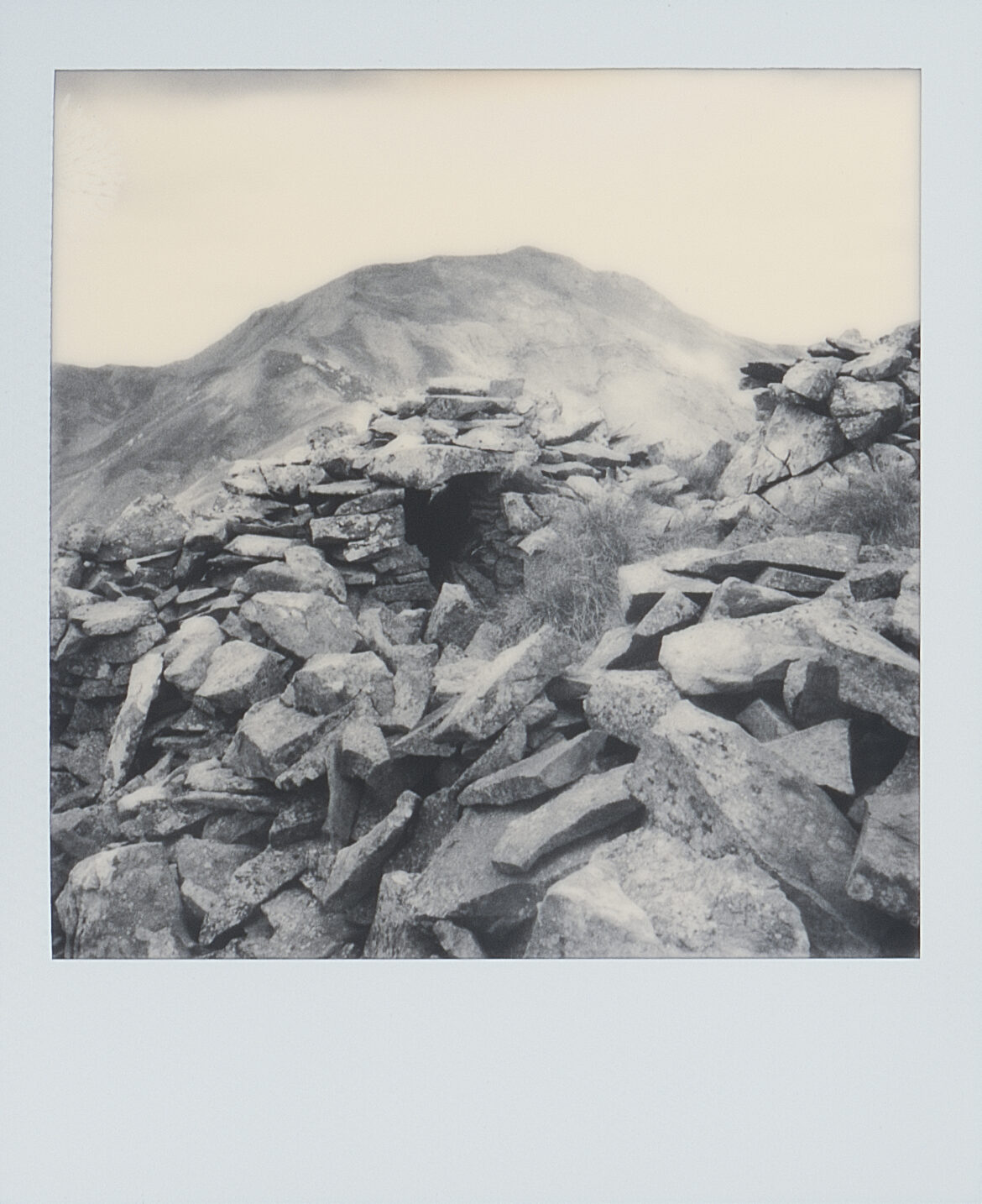
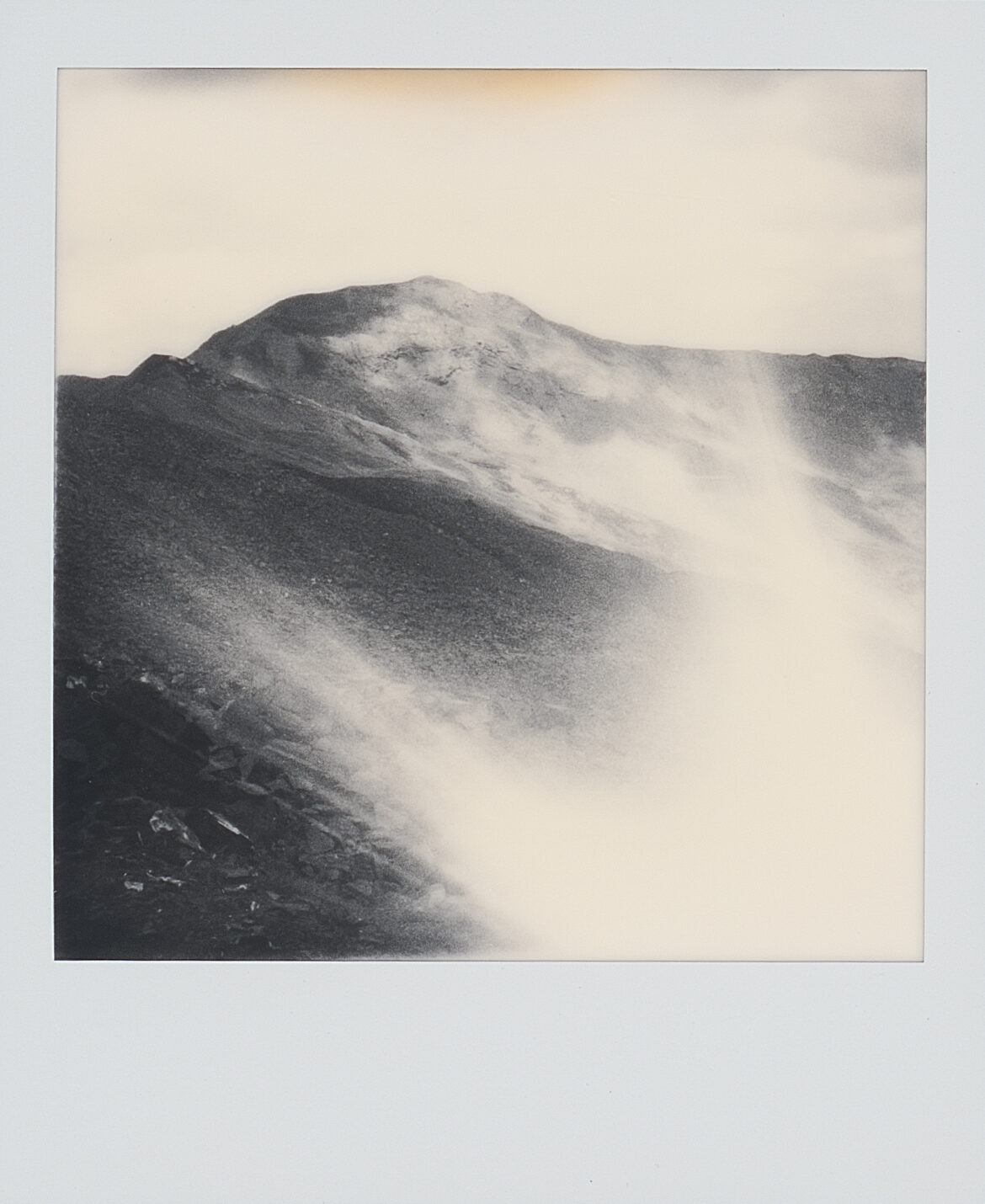
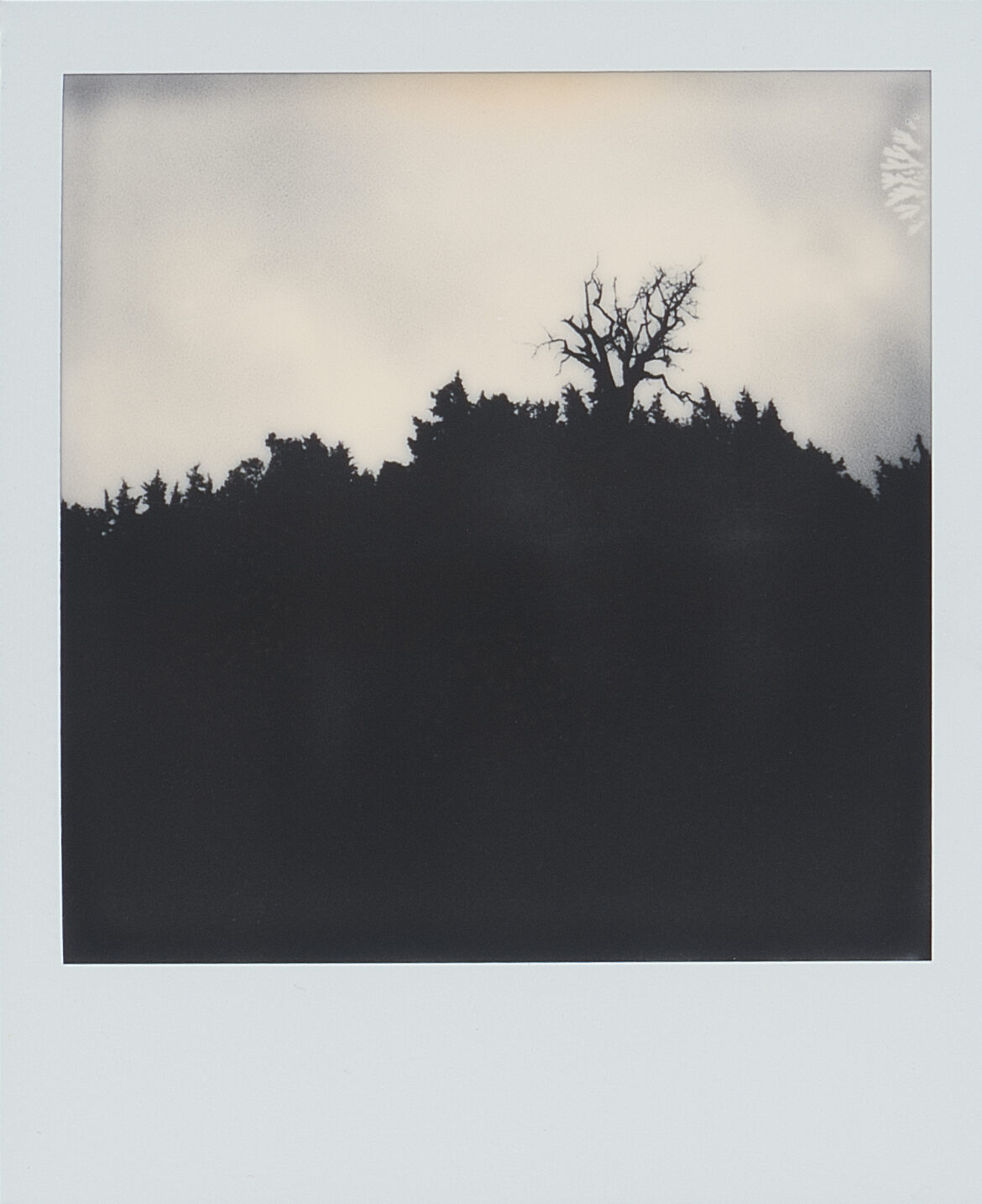
When I shifted from fiction to the study of actual history, my reaction was similar: discomfort, unease, and a sense of shame. Despite being one of the most extensively studied periods, the Greek Civil War remains largely unknown to many. The photographic archives that survived serve as visual evidence, shifting the focus away from ideologies and events and toward the individuals who participated and endured the tragedy. I decided to follow in their footsteps—to ‘’scale the mountain” myself. I explored locations where major battles of the Civil War occurred, near Greece’s northern borders, capturing them with a Polaroid camera using two types of monochrome film: cyan and black-and-white. Since Polaroid technology existed by 1947, I envisioned a soldier holding a similar camera, capturing the same landscapes, uncertain if he’d survive to the next day. The resulting images represent a personal attempt to approach a deeply wounded past.
Polaroid photography stands out for its instant results, uniqueness, and materiality. It cannot be altered: it is what it is. There is no negative; each image is unique, ephemeral, and irreplaceable—just like life itself. Even our memory, the way we recall the past, may change. But that doesn’t mean the past itself changes. Polaroid’s materiality becomes a symbol of our inability to intervene in the events that shaped history, in memory, in what ultimately remains.